
Christmas Plush with Fur Trim Tree Skirt Red and White -Wondershop™
- Highlights
- Red plush Christmas tree skirt
- Made from polyester fabric
- White faux-fur trim
- Button-and-loop closures
- 48in circular silhouette
- Spot or wipe clean
$25.00

48″ Christmas Red Felt Tree Skirt with White Wavy Border and Pom Trim – Wondershop™
- Highlights
- Christmas tree skirt in red
- Wavy border with pompom trim
- Made from felt fabric
- Circular shape
- 54in diameter
- Hook-and-loop closure
$25.00
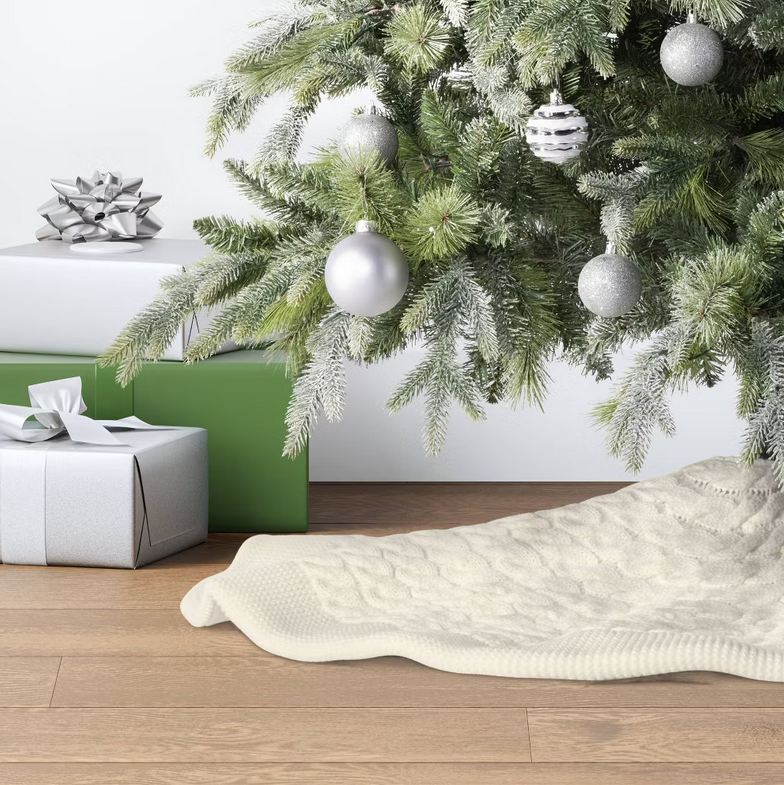
48″ Centric Cable Knit Tree Skirt – Wondershop™
- Highlights
- Centric cable-knit Christmas tree skirt
- Made from acrylic, felt and polyester fabric
- Solid color
- Hook-and-loop closures
- 48in circular silhouette
- Spot or wipe clean
$45.00
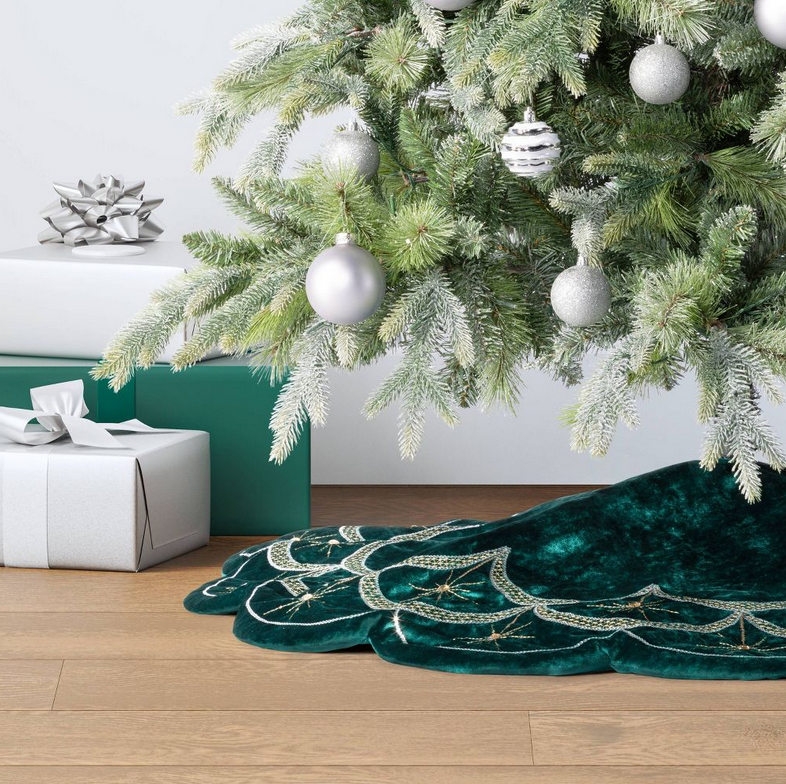
48″ Christmas Dia Art Deco Embellished Soft Velvet Tree Skirt Green – Wondershop™
- Highlights
- Green tree skirt
- Embellished design
- Made of soft velvet
- Hole at the center
- Snap closures
- 48in
$45.00
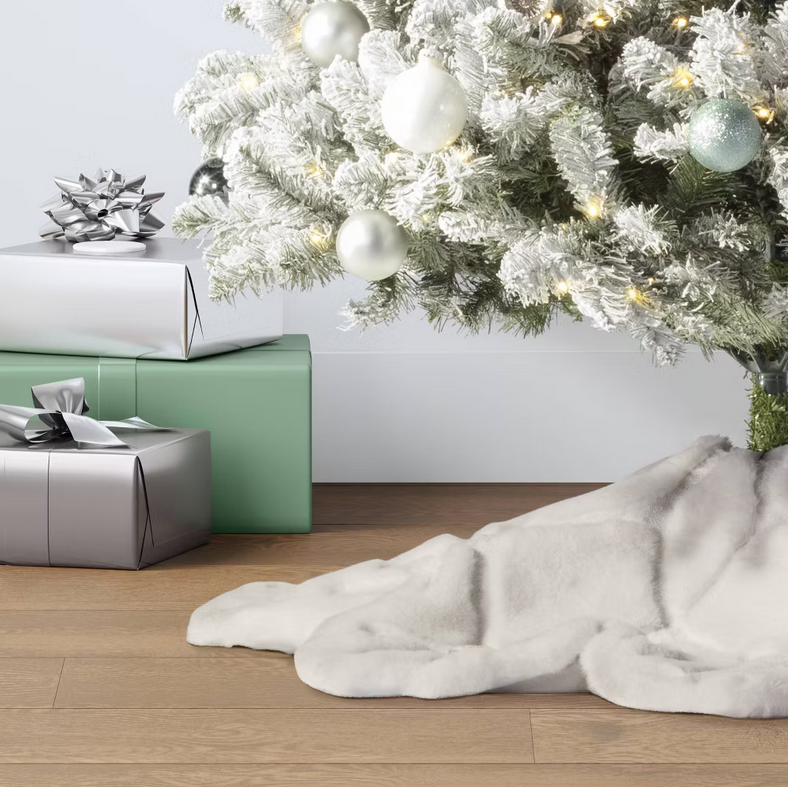
48″ Christmas Dia Faux Fur Snowflake Shaped Tree Skirt – Wondershop™
- Highlights
- Snowflake-shaped Christmas tree skirt
- White faux-fur etched-out pattern
- Made from polyester fabric
- Hook-and-loop closures
- 48in diameter
- Spot or wipe clean
$45.00
From Confused Shopper to Tree Skirt Expert – Everything You Need to Know Before You Buy
I’ll never forget the year I proudly set up my first real Christmas tree in my own apartment. I spent hours selecting the perfect tree, carefully stringing lights, and hanging ornaments I’d collected over the years. But when I stepped back to admire my handiwork, something looked… off. The tree was beautiful from the middle up, but the base? A disaster. The plastic tree stand sat there in all its utilitarian glory, completely ruining the magical aesthetic I’d worked so hard to create. That’s when I realized I’d completely overlooked one of the most important elements of Christmas tree decorating: the Christmas tree skirt.
Fast forward to today, and I’ve become something of a tree skirt enthusiast. I’ve made them, bought them, borrowed design ideas from fancy department stores, and learned more than I ever thought possible about this seemingly simple holiday accessory. What I’ve discovered is that choosing the right Christmas tree skirt is both an art and a science – and it can truly make or break your entire holiday display.
What Exactly Is a Christmas Tree Skirt, Anyway?
Let me start with the basics, because I’ve actually had friends ask me this question with genuine confusion in their eyes. A Christmas tree skirt is a circular or octagonal piece of fabric that sits at the base of your Christmas tree, covering the tree stand and creating a finished, polished look. But honestly, it’s so much more than just camouflage for an ugly stand.
Think of it as the frame for a beautiful painting, or the foundation of a stunning outfit. A tree skirt serves multiple practical purposes: it catches falling pine needles (trust me, real trees shed like crazy), protects your floors from water spills when you’re watering the tree, and creates a designated space for presents. But beyond these functional benefits, it’s a major decorative element that ties your entire Christmas aesthetic together.
The traditional tree skirt has a slit from the outer edge to the center hole, allowing you to wrap it around the tree trunk without having to lift the entire tree. Some designs use ties, Velcro, or other fastening methods to keep the slit closed and create a seamless appearance. I learned this the hard way after trying to wrestle my first tree skirt into place without understanding how the opening worked – let’s just say it wasn’t my finest moment.
How Do I Choose the Right Size Christmas Tree Skirt?
This is where I made my second major mistake. I assumed any tree skirt would fit any tree. Wrong. So wrong. The size of your Christmas tree skirt matters enormously, and getting it right the first time will save you from the hassle of returns or, worse, settling for something that looks awkward.
Here’s what I’ve learned about sizing: The diameter of your tree skirt should extend at least 4-6 inches beyond the widest branches of your tree. For most standard trees, this translates to specific measurements:
For a small tree (4-5 feet tall), you’ll want a tree skirt with a diameter of 36-40 inches. I use this size for the tabletop tree I keep in my bedroom – it’s proportionate and doesn’t overwhelm the smaller scale.
Medium trees (6-7 feet) look best with 48-54 inch diameter skirts. This is the sweet spot for most households, and honestly, this is the size I find myself recommending most often to friends and family.
Large trees (8 feet and up) need skirts that are 60-72 inches in diameter. I once visited a friend who had a massive 9-foot tree with a tiny 40-inch skirt beneath it, and it looked like the tree was wearing a cocktail dress when it needed an evening gown. The proportions were completely off.
But here’s a pro tip I wish someone had told me earlier: when in doubt, go bigger. A slightly oversized tree skirt creates a more luxurious, abundant look and gives you more room to display presents. Plus, it’s easier to gather or fold excess fabric to make a skirt smaller than to stretch one that’s too small.
Also consider the center hole diameter – typically ranging from 8 to 12 inches. This needs to fit around your tree stand while still concealing it. I measure my tree stand before shopping now, which has saved me from multiple sizing disasters.
Where Can I Buy a High-Quality Christmas Tree Skirt?
After years of hunting for the perfect tree skirt, I’ve developed a mental map of the best places to shop. The key is knowing what you’re looking for before you start browsing, because the options can be overwhelming.
Traditional brick-and-mortar stores remain my first stop for tree skirts because I can touch the fabric, assess the quality of stitching, and get a real sense of the colors. Department stores typically unveil their holiday collections in October, and I’ve found stunning options at stores like Macy’s, Nordstrom, and Dillard’s. The advantage here is seeing items in person – photographs can be deceiving when it comes to fabric texture and true color.
Home goods stores like HomeGoods, At Home, and Pier 1 (when it existed – still mourning that loss) offer fantastic variety at mid-range prices. I’ve scored some of my favorite tree skirts during their early November arrivals when stock is fresh and selection is at its peak.
Specialty Christmas stores, both year-round physical locations and seasonal pop-up shops, provide unique, often handcrafted options you won’t find elsewhere. Yes, you’ll pay premium prices, but if you’re looking for something truly special or willing to invest in an heirloom piece, this is where you’ll find it.
Online retailers have become increasingly sophisticated with their holiday offerings. I’ve had excellent experiences with websites that offer detailed measurements, multiple photographs from different angles, and customer reviews with photos. The disadvantage is not being able to assess fabric quality in person, but generous return policies help mitigate this risk.
Craft fairs and artisan markets showcase one-of-a-kind pieces made by local creators. I bought a hand-quilted tree skirt three years ago from a talented artist at a holiday market, and it remains the centerpiece of my Christmas décor. Supporting small businesses while getting something unique? That’s a win-win.
What Are the Best Materials for Christmas Tree Skirts?
The material of your Christmas tree skirt impacts everything from its appearance to its durability to how well it functions in protecting your floors. I’ve experimented with virtually every fabric type, and each has distinct advantages and drawbacks.
Velvet tree skirts exude luxury and elegance like nothing else. The rich texture catches light beautifully and creates depth in photographs. I use a deep burgundy velvet skirt for formal holiday gatherings, and guests always comment on it. However, velvet shows every wrinkle and crease, requires careful storage, and can be challenging to keep looking pristine if you have pets or small children.
Burlap and natural fibers have surged in popularity for farmhouse and rustic Christmas aesthetics. I adore the casual, organic feel of burlap, and it’s remarkably durable. The rough texture adds interesting contrast to shiny ornaments and smooth ribbon. On the downside, burlap can be scratchy, may shed fibers, and often lacks the polished appearance some formal settings require.
Quilted cotton offers the perfect balance of durability, easy maintenance, and visual interest. The quilted pattern adds dimension, and cotton is machine washable – a huge advantage when pine needles and tree water inevitably make a mess. I keep a quilted cotton skirt as my everyday option because it’s so forgiving and practical.
Faux fur creates drama and texture that’s especially stunning with white or champagne color palettes. I have a white faux fur skirt that looks like fresh snow beneath my tree, and the effect is absolutely magical. The challenges? Faux fur attracts pet hair like a magnet, can be difficult to clean, and some lower-quality versions shed synthetic fibers everywhere.
Silk and satin bring glamour and shine to formal holiday displays. The reflective quality of these fabrics enhances twinkle lights beautifully. However, both materials are delicate, show water spots easily, and require professional cleaning or very gentle hand washing.
Tapestry and jacquard fabrics with woven patterns offer traditional elegance with built-in visual interest. These heavier materials drape beautifully and typically wear well over many seasons. I inherited a tapestry tree skirt from my grandmother, and after fifteen years, it still looks magnificent.
How Do I Match a Christmas Tree Skirt with My Tree Decorations?
This question gets to the heart of creating a cohesive, intentional Christmas display rather than a random collection of holiday items. Matching your tree skirt to your overall decorating scheme transforms your tree from nice to absolutely stunning.
I approach this by identifying my tree’s color story first. For my traditional red and gold tree, I chose a deep green velvet skirt that allows the ornaments to pop while grounding the entire display. The green provides contrast without competing for attention.
When I do my silver and blue winter wonderland tree, a white faux fur skirt creates the snowy landscape effect I’m after. The neutral white base makes the cool-toned ornaments appear even more striking.
Consider the style and era you’re evoking. My vintage-inspired tree with retro bubble lights and shiny brite ornaments pairs perfectly with a red felt skirt featuring white pom-pom trim – very 1950s. My modern minimalist tree with geometric ornaments and a monochromatic color scheme gets a simple gray linen skirt with clean lines.
Texture plays a crucial role in creating visual depth. If your tree features lots of smooth, shiny ornaments, a textured skirt like burlap or quilted fabric adds necessary contrast. Conversely, if your ornaments have varied textures – wood, felt, knits – a smooth satin or velvet skirt provides a calming visual anchor.
Don’t forget about pattern coordination. I learned this lesson when I paired a busy, patterned tree skirt with equally busy ornaments – the result was visual chaos. Now I follow this rule: if your ornaments are varied and colorful, choose a solid or subtly patterned skirt. If your ornaments follow a simple, cohesive theme, you can be bolder with your skirt pattern.
What Are the Top Trends for Christmas Tree Skirts This Year?
Holiday décor trends evolve constantly, and Christmas tree skirts have become serious style statements. After attending holiday markets and scrolling through countless design blogs, I’ve identified the trends dominating this year’s landscape.
Oversized, luxury skirts are everywhere. We’re talking 72-inch diameter skirts with lavish ruffles, multiple layers, and abundant fabric that pools luxuriously around the tree base. This maximalist approach creates a dramatic, opulent foundation that makes even modestly decorated trees look expensive.
Sustainable and eco-conscious materials reflect growing environmental awareness. I’m seeing gorgeous skirts made from recycled fabrics, organic cotton, and even upcycled vintage textiles. These pieces allow you to celebrate beautifully while aligning with your values.
Personalization has exploded beyond simple monograms. Custom embroidery, family names, meaningful dates, and even pet silhouettes are being incorporated into tree skirt designs. I commissioned a skirt embroidered with my children’s names and their birth years – it’s become an heirloom I’ll treasure forever.
Geometric patterns and modern designs are challenging traditional holiday motifs. Instead of snowflakes and Santa, we’re seeing chevrons, hexagons, and abstract patterns in unconventional color combinations like blush pink and sage green, or navy and copper.
Textural mixing combines different materials within a single skirt design. I’ve spotted skirts featuring sections of velvet, burlap, and faux fur all in one piece, creating stunning visual and tactile interest.
Colored fur and plush options go beyond basic white. This year, I’m obsessed with the dusty pink and gray faux fur skirts that create a soft, romantic foundation. Jewel-toned plush options like emerald and sapphire are also having a moment.
Can I Make a DIY Christmas Tree Skirt at Home?
Absolutely! In fact, creating a DIY Christmas tree skirt has become one of my favorite holiday crafting projects. Not only can you customize every detail to match your exact vision, but the sense of accomplishment when you complete it is incredibly satisfying.
My first DIY tree skirt was embarrassingly simple – basically a circle of felt with a slit cut to the center and some ribbon trim hot-glued around the edge. But you know what? It looked charming, cost about twelve dollars in materials, and taught me basic construction techniques I’ve since refined.
For beginners, I recommend starting with a felt circle skirt. Felt doesn’t require hemming (the edges won’t fray), it’s easy to cut, and it’s affordable enough that mistakes don’t feel devastating. You’ll need about two yards of felt for a 48-inch skirt, sharp fabric scissors, a measuring tape, chalk or a fabric marker, and optional embellishments like pom-poms, ribbon, or sequins.
The construction process is straightforward: fold the felt in quarters, measure from the corner point to create your outer circle radius and inner circle for the trunk opening, cut both circles, then cut a straight line from the outer edge to the center hole. Finish with your choice of decorative elements.
As I gained confidence, I graduated to more complex projects. I’ve sewn quilted skirts using traditional quilting techniques, created a ruffled burlap skirt with five tiers of fabric, and even tried my hand at a faux fur version (that one was challenging – faux fur is difficult to sew).
The internet is filled with free patterns and tutorials for every skill level. I’ve bookmarked dozens of instructional videos that walk through specific techniques, from adding piping to creating a gathered edge to incorporating pockets for storing small decorations.
The cost savings can be substantial. A high-quality store-bought tree skirt might run $80-150, while making your own with premium materials typically costs $25-50. Plus, you can create something completely unique that perfectly matches your vision.
What’s the Difference Between a Christmas Tree Skirt and a Tree Collar?
I get asked this constantly, and honestly, I didn’t understand the distinction myself until a few years ago. Christmas tree skirts and tree collars serve similar purposes but have distinctly different aesthetics and construction.
A traditional Christmas tree skirt is a flat, circular piece of fabric that lies on the floor around the tree base, extending outward from the trunk. The fabric drapes and pools, creating soft folds and a textile element that adds warmth to the display.
A tree collar, by contrast, is a structured, cylindrical container that sits around the base of the tree like a decorative pot. Most collars are made from metal (galvanized steel is hugely popular), wood, or wicker. They stand upright, typically 10-14 inches tall, and completely conceal the tree stand within their walls.
I use both, depending on the tree and the room. In my living room with a formal, traditional Christmas tree, I prefer a luxurious velvet skirt that extends far beyond the tree’s footprint and creates a soft landing for presents. The textile element feels cozy and adds needed softness to balance the hard edges of furniture.
In my entryway, where I keep a smaller, more modern tree, I use a galvanized metal collar. The streamlined, structured look complements the contemporary aesthetic of that space. Plus, the collar takes up less floor space – important in a smaller area.
Tree collars have practical advantages: they’re incredibly easy to install (you just set them around the stand), they contain water spills within their walls, and they require virtually no maintenance. However, they don’t provide much surface area for displaying gifts, and they lack the soft, cozy quality that many people associate with Christmas.
Tree skirts offer more versatility in terms of color, pattern, and style. They create a larger visual footprint and provide that classic, traditional Christmas look many of us grew up with. The trade-off is that they require more floor space and need occasional adjustment to keep them looking neat.
Some creative decorators use both simultaneously – a collar to contain the stand and a smaller skirt extended beyond the collar for added color and texture. I tried this combination last year with a wood collar and a white fur skirt, and the layered look was surprisingly sophisticated.
Are There Eco-Friendly Christmas Tree Skirt Options?
As someone who’s become increasingly conscious of my environmental impact, finding eco-friendly Christmas tree skirt options has become important to me. The good news? Sustainable choices abound if you know where to look.
Organic cotton tree skirts are my go-to sustainable option. Organic cotton is grown without harmful pesticides or synthetic fertilizers, and the fabric is biodegradable at the end of its life. I found a gorgeous organic cotton skirt with botanical prints last year from a company that uses eco-friendly dyes. It’s durable, machine washable, and I feel good knowing it wasn’t produced with harsh chemicals.
Recycled material skirts have become increasingly available. I’ve seen stunning options made from recycled plastic bottles transformed into soft, felt-like fabric. Others use reclaimed or deadstock fabrics that would otherwise end up in landfills. These pieces prove that sustainable can absolutely be stylish.
Natural fiber skirts made from jute, hemp, or linen offer biodegradable options with minimal environmental processing. My jute tree skirt has a beautiful, natural texture and has held up beautifully through four holiday seasons. When it eventually wears out, I can compost it without guilt.
Vintage and secondhand tree skirts represent the ultimate in sustainable shopping. I’ve found incredible pieces at estate sales, thrift stores, and online vintage marketplaces. Not only are you keeping items out of landfills, but vintage skirts often feature superior craftsmanship and unique designs you can’t find in modern production.
Making your own skirt from repurposed materials combines creativity with sustainability. I’ve seen beautiful DIY tree skirts made from old sweaters, vintage quilts that were too damaged to use as bedding, and even denim from outgrown jeans. The possibilities are truly limitless.
Many eco-conscious brands now offer tree skirts that give back – programs where a portion of proceeds supports environmental causes, tree-planting initiatives, or conservation efforts. While this doesn’t make the product itself more sustainable, it allows your purchase to contribute positively beyond your own home.
How Do I Clean and Maintain a Christmas Tree Skirt?
Let me share some wisdom earned through trial and error: properly cleaning and maintaining your Christmas tree skirt significantly extends its life and keeps it looking beautiful year after year.
Before we even get to cleaning, let’s talk about prevention. I place a waterproof tree mat or plastic liner under my tree skirt, especially with real trees. This barrier catches water drips and falling needles before they can penetrate the skirt fabric. This simple step has saved me from countless stains and has made post-holiday cleanup infinitely easier.
When the season ends, I address cleaning before storing. For machine-washable fabrics like cotton and most synthetic materials, I shake the skirt vigorously outdoors to remove pine needles and debris, then machine wash on a gentle cycle with mild detergent. Cold water prevents shrinkage and color fading. I air dry or use the lowest heat setting on my dryer to prevent damage.
Velvet, silk, and other delicate fabrics require more careful handling. I spot-clean stains with a mixture of gentle fabric cleaner and water, dabbing rather than rubbing to avoid damaging the pile or sheen. For deeper cleaning, I take these pieces to a professional dry cleaner who specializes in delicate textiles.
Faux fur demands special attention. I gently shake or brush it to remove debris, then spot clean any stains with a damp cloth and mild soap. Machine washing faux fur can damage the fibers and ruin the texture. If it absolutely needs a full cleaning, I hand wash it in cool water with gentle detergent, then air dry it completely before storing.
Burlap and natural fiber skirts can usually be shaken out and spot-cleaned. I avoid soaking burlap because it can lose its shape and stiffness when saturated. A soft brush helps remove any stuck-on debris without damaging the weave.
Storage is equally important for maintaining your tree skirt’s condition. I never fold my tree skirts because creases can become permanent, especially in velvet and other pile fabrics. Instead, I roll them loosely around a cardboard tube (a wrapping paper tube works perfectly), then place them in breathable storage bags or boxes. Cedar chips or lavender sachets tucked into the storage container keep fabric fresh and deter moths.
For particularly precious skirts, I invest in acid-free tissue paper to wrap them before storage. This prevents yellowing and provides an extra layer of protection. I store all my tree skirts in a climate-controlled area – extreme temperature fluctuations and humidity can damage fabrics over time.
What Are Some Unique Designs for Christmas Tree Skirts?
After years of hunting for the perfect tree skirt, I’ve encountered some truly unique Christmas tree skirt designs that completely reimagine this traditional element. These innovative approaches have inspired my own decorating and opened my eyes to possibilities beyond the standard round fabric circle.
Quilted narrative skirts tell stories through their design. I’ve seen skirts featuring pieced images of winter scenes, nativity stories, or family traditions. Each panel represents a different element, creating a visual narrative that circles the tree. My friend commissioned a quilted skirt depicting scenes from “The Nutcracker” – each section shows a different act of the ballet, and it’s absolutely mesmerizing.
Layered petal designs mimic flower petals radiating from the tree trunk. Instead of a simple circle, these skirts feature multiple curved segments that overlap and create dimension. I attempted a DIY version using burgundy and gold satin, and the result looked like a poinsettia blooming beneath my tree.
Embroidered family heirloom skirts showcase intricate needlework that becomes more meaningful each year. My sister-in-law started embroidering a tree skirt the year she got married, adding new elements each December – children’s names, memorable dates, significant events. Fifteen years later, it’s a treasured family history told in thread.
Reversible skirts offer two looks in one piece. One side might be formal velvet for Christmas Eve gatherings, while the reverse features playful patterns for casual family time. I love the versatility this provides without requiring storage space for multiple skirts.
Faux gift wrap skirts look like enormous wrapped presents encircling the tree. Some feature realistic ribbon and bow details, while others create the illusion through printed fabric. These designs are particularly clever because they make even an empty tree base look abundantly festive before the real presents arrive.
Ruffled tier skirts create dramatic volume through layers of gathered fabric. Each tier adds dimension and movement. I’m particularly drawn to ombré versions where the ruffles graduate from one color to another, creating a stunning gradient effect.
Patchwork and crazy quilt styles combine different fabrics, textures, and patterns in seemingly random but carefully planned arrangements. These bohemian-inspired skirts work beautifully with eclectic decorating styles and can incorporate sentimental fabric scraps from meaningful clothing or textiles.
How Much Does a Christmas Tree Skirt Typically Cost?
The price range for Christmas tree skirts varies so dramatically that it’s almost comical. I’ve seen options from under ten dollars to well over five hundred, and understanding what influences these prices helps you make informed purchasing decisions.
Budget-friendly options ($10-30) typically include basic felt or simple polyester skirts, often with minimal embellishment. These work perfectly well if you’re decorating on a tight budget or want something temporary. I started with an eighteen-dollar felt skirt, and it served me faithfully for several years before I was ready to upgrade.
Mid-range selections ($30-80) offer better quality fabrics, more interesting designs, and improved construction. This price point includes nice quilted cotton skirts, decent faux fur options, and attractive printed fabrics. Most of my collection falls into this category because it offers the best balance of quality and affordability.
Premium tree skirts ($80-200) feature luxury materials like velvet, high-quality faux fur, intricate embroidery, or hand-quilted construction. These pieces are substantial investments, but they transform your tree display and typically last many years with proper care. My burgundy velvet skirt cost $140, and five years later, it still looks brand new.
Luxury and heirloom pieces ($200+) include hand-crafted skirts, those made from silk or other luxury fabrics, or pieces with extensive hand embroidery or beadwork. I’ve seen museum-quality pieces priced at $500 or more, featuring hours of artisan labor and premium materials. While I haven’t personally invested at this level, I understand the appeal for those seeking true heirloom pieces.
Custom and personalized skirts vary widely depending on the maker and complexity of customization. Simple monogramming might add $15-30 to the base price, while fully custom designs can run $150-400 or more.
Several factors influence pricing beyond just materials. Brand name, country of manufacture, hand-crafted versus mass-produced, and seasonal demand all play roles. I’ve learned that shopping in January rather than November can yield significant discounts on the exact same items.
Can I Use a Christmas Tree Skirt for an Outdoor Tree?
This question comes up frequently, and my answer is: yes, but with important caveats. Using a Christmas tree skirt outdoors requires different considerations than indoor use.
First, weather resistance is crucial. Most traditional fabric tree skirts aren’t designed to withstand rain, snow, or prolonged moisture exposure. Cotton, velvet, and natural fibers will absorb water, potentially develop mold or mildew, and deteriorate quickly outdoors. I learned this the hard way when I used a burlap skirt outdoors one year – after just two weeks of typical December weather, it was ruined.
For outdoor use, look for weather-resistant materials. I’ve had success with:
Heavy-duty outdoor fabrics treated with water-resistant coatings. These materials are designed for patio furniture and other outdoor textiles, so they can handle the elements. They might not have the soft, cozy feel of traditional tree skirts, but they’re practical for outdoor applications.
Vinyl or plastic tree skirts specifically designed for outdoor use. While these lack the textile warmth of fabric skirts, they’re completely waterproof and easy to clean. I use a red vinyl skirt with white faux fur trim around my front porch tree, and it’s held up beautifully through multiple seasons.
Synthetic faux fur that’s been treated for outdoor use can work, though you’ll need to verify the manufacturer’s recommendations. Some synthetic materials become stiff and brittle in freezing temperatures.
Consider alternative solutions for outdoor trees. I’ve seen beautiful presentations using:
Large woven baskets turned upside down around the tree base – rustic and weather-resistant.
Decorative pots or galvanized containers that serve the same concealing function as a tree collar.
Piles of wrapped “gifts” (empty boxes) that create a festive look while being easily removable if weather threatens.
Natural materials like pinecones, evergreen boughs, or birch logs arranged around the tree base. These complement outdoor settings beautifully and don’t suffer from weather exposure.
If you do use a fabric skirt outdoors, bring it inside during harsh weather and be prepared to clean and dry it thoroughly after each use. The effort required for this maintenance often outweighs the benefit, which is why I’ve largely switched to alternative solutions for my outdoor trees.
What Are the Best Colors for a Modern Christmas Tree Skirt?
The definition of modern Christmas tree skirt colors has evolved significantly from traditional red and green, and I find this shift incredibly exciting. Modern palettes embrace unexpected combinations and sophisticated neutrals that create stunning contemporary displays.
Monochromatic schemes dominate modern Christmas design. All-white trees with white or cream tree skirts create a serene, minimalist aesthetic that feels fresh and elegant. I styled my bedroom tree entirely in whites and creams last year – white ornaments, white lights, and an ivory faux fur skirt. The cohesive palette was surprisingly impactful.
Gray has emerged as the neutral darling of modern Christmas. Charcoal gray, dove gray, and silvery-gray skirts provide sophisticated foundations that allow other colors to shine. My gray linen skirt pairs beautifully with metallic ornaments and creates a gallery-like aesthetic that feels more art installation than traditional holiday display.
Blush pink and dusty rose bring warmth without traditional Christmas obviousness. These romantic hues work beautifully with metallics, especially copper and rose gold. I styled a friend’s tree with a blush velvet skirt, white ornaments, and copper accents, and every guest photographed it.
Navy blue offers unexpected richness. Deep navy provides dramatic contrast for silver, gold, or white decorations. A navy velvet skirt under a tree decorated with silver stars and white lights creates a night-sky effect that’s absolutely magical.
Black might seem counterintuitive, but it’s incredibly chic in the right context. A black tree skirt creates maximum contrast for colorful ornaments and allows them to truly pop. I’ve seen this work particularly well with jewel-toned decorations or all-white color schemes.
Metallics like champagne, silver, and gold bring inherent glamour. A gold faux-leather or metallic fabric skirt catches light beautifully and eliminates the need for additional embellishment. These work especially well with minimalist ornament schemes.
Natural materials in their original colors – undyed linen, raw cotton, natural jute – create organic, Scandinavian-inspired aesthetics. These earthy tones ground modern displays and complement wood ornaments, simple white lights, and minimal decoration.
Color blocking and geometric patterns in unexpected combinations define cutting-edge modern design. Think emerald green paired with burnt orange, or deep teal combined with mustard yellow. These bold choices make strong style statements.
Are There Personalized Christmas Tree Skirts Available?
The personalized Christmas tree skirt market has exploded in recent years, and I’m here for it. These customized pieces transform a purely functional item into a meaningful family heirloom that tells your unique story.
Monogrammed skirts represent the most straightforward personalization option. A single initial, family surname, or combination of first initials can be embroidered or appliquéd onto virtually any skirt style. I ordered monogrammed skirts as wedding gifts for two friends, and both told me they’re among their most treasured possessions.
Family name skirts feature your surname prominently displayed, often in beautiful script fonts or blocked letters. Some designs incorporate establishment dates (“The Johnson Family, Est. 2015”) that commemorate marriage or home purchase years. These create instant family pride and make beautiful backgrounds for holiday photographs.
Names of all family members can be embroidered around the skirt’s circumference. I’ve seen this done with children’s names, pet names included, and even extended family members. One particularly touching version I encountered listed three generations of family names – grandparents, parents, and grandchildren all represented in beautiful embroidery.
Photo transfer skirts are an emerging option where favorite family photographs can be printed or transferred onto fabric sections of the skirt. I’ve seen collages of baby photos, wedding pictures, and even beloved pets incorporated into tree skirt designs. While these might not align with traditional aesthetics, they create incredibly personal, conversation-starting pieces.
Custom embroidered messages or meaningful dates allow you to commemorate what matters most. Birth dates, adoption dates, anniversary dates, or motivational family mottos can all be incorporated. A friend had her children’s birthdates embroidered with corresponding birthstone colors – it’s both beautiful and meaningful.
Hand-painted custom designs take personalization to the artistic level. Local artisans can create completely unique pieces based on your specifications. I commissioned a hand-painted skirt featuring my childhood home – the house where Christmas always happened when I was growing up. The artist captured every detail, and now that beloved house encircles my tree each December.
Sports team themed skirts might not appeal to everyone, but for passionate fans, a tree skirt in team colors featuring logos or championships can be the perfect personal touch. These work especially well in rec rooms or casual spaces.
Many online retailers and Etsy sellers specialize in custom tree skirts at surprisingly affordable prices. Lead times vary, so I recommend ordering personalized pieces by early November to ensure holiday delivery.
How Do I Secure a Christmas Tree Skirt So It Stays in Place?
There’s nothing more frustrating than constantly adjusting a Christmas tree skirt that won’t stay in place. I’ve battled with skirts that bunch, slide, and generally refuse to cooperate, and I’ve finally developed a reliable arsenal of securing techniques.
Weight is your friend. The simplest solution is adding discrete weights around the skirt’s perimeter. I use small decorative items that look intentional – pinecones, wrapped “gift” boxes, or decorative lanterns placed strategically around the edge. These serve double duty by adding to the overall display while keeping the skirt anchored.
Velcro dots or strips can secure the slit closure where the skirt wraps around the tree trunk. I attach one side of the Velcro to each edge of the slit, allowing me to fasten them together after placing the skirt around the tree. This creates a seamless appearance and prevents gapping. The key is using the adhesive-backed variety designed for fabrics and replacing it annually since the sticky backing weakens over time.
Fabric weights sewn into the hem create permanent ballast. I’ve added these to several of my skirts by hand-stitching small weights every 8-10 inches around the circumference. Fishing weights work well, or you can purchase specialty fabric weights from craft stores. This solution is particularly effective for lightweight fabrics like satin that tend to shift easily.
Carpet tape or double-sided tape adheres the skirt to your flooring, though I use this cautiously. Test in an inconspicuous area first to ensure it won’t damage floors or leave residue. I only use this method on hardwood or tile, never on carpet where removal becomes problematic.
Skirt pins or clips designed specifically for tree skirts provide an elegant solution. These decorative clips attach the skirt to itself around the tree trunk, keeping everything secure while adding embellishment. Some resemble vintage brooches, while others are rustic wood or metal designs that complement different decorating styles.
Creating a fabric overlap where the skirt edges meet around the trunk provides built-in security through tension. When cutting or constructing a DIY skirt, I make the slit slightly shorter than necessary, forcing the edges to overlap by 2-3 inches. This overlap naturally wants to stay in place and can be additionally secured with hidden safety pins or Velcro.
Placing presents strategically is perhaps the most natural securing method. Once gifts accumulate under the tree, they naturally weight down and anchor the skirt. I sometimes place a few wrapped empty boxes early in the season to serve this purpose before real presents appear.
Can I Use a Christmas Tree Skirt with a Pre-Lit Tree?
Absolutely, and in fact, using a Christmas tree skirt with a pre-lit tree is often easier than with traditional trees. However, there are a few considerations I’ve learned through experience.
Pre-lit trees typically have the light cord exiting from the trunk near the base, and this cord needs to reach your electrical outlet. Most Christmas tree skirts accommodate this easily because of their center slit design. I simply route the cord through the slit opening before securing the skirt in place. The cord becomes nearly invisible against the tree trunk.
Some pre-lit trees have more complex electrical situations – multiple plug connections or battery packs housed in the tree stand area. I’ve found that slightly enlarging the center hole of the skirt (if necessary) provides access to these components without compromising the skirt’s appearance. Most stands are wider than they are tall, so a skirt that fits around the stand’s diameter automatically conceals everything below.
Tree collars work beautifully with pre-lit trees because their cylindrical design naturally creates space for cords at the back. I position the collar so any gap or access point faces the wall, making cord management invisible from the front viewing angles.
One advantage of pre-lit trees is their lighter weight compared to fully decorated traditional trees, making skirt installation easier. You can sometimes gently tilt the tree slightly to slide the skirt underneath, then settle it back into place – something I’d never attempt with a heavy, water-filled real tree.
Timer plugs or smart plugs for controlling your tree lights fit easily behind or beneath most tree skirts without creating visible bulk. I use a smart plug positioned at the back of my tree, and my skirt conceals it completely while still allowing easy access for troubleshooting if needed.
The only potential challenge occurs with pre-lit trees that have built-in music players, remote control receivers, or other electronic features with control panels on the stand. In these cases, ensure your tree skirt allows access to these controls, or consider a tree collar that provides easy access around its circumference.
What Are the Differences Between Fabric and Faux Fur Tree Skirts?
I’ve used both fabric and faux fur tree skirts extensively, and each offers distinct characteristics that suit different needs and aesthetics. Understanding these differences helps you choose the right option for your specific situation.
Traditional fabric tree skirts (cotton, velvet, burlap, satin, etc.) offer incredible variety in pattern, color, and style. You can find literally thousands of print options, from classic plaids to modern geometrics to traditional holiday motifs. This versatility means you can exactly match your decorating scheme. Fabric skirts typically drape softly and create gentle folds that add movement and dimension to your display.
Maintenance of fabric skirts is generally straightforward – most cotton and synthetic fabrics are machine washable. They fold or roll for storage relatively compactly and resist crushing better than faux fur. I can stack my fabric skirts in a storage bin without worrying about permanent damage.
Faux fur tree skirts create immediate visual and textural impact. The plush, three-dimensional quality adds luxury and warmth that flat fabric can’t replicate. When you want to make a statement or create a winter wonderland aesthetic, faux fur delivers dramatically. White faux fur particularly evokes fresh snow and creates a magical foundation for your tree.
However, faux fur presents maintenance challenges. It attracts and holds pet hair, dust, and debris more than smooth fabrics. Cleaning requires more care – most faux fur should be spot-cleaned or gently hand-washed rather than machine-washed. The pile can become matted or crushed, especially if heavy objects sit on it or if it’s stored improperly.
Storage also differs significantly. Faux fur shouldn’t be tightly folded because creases can become permanent and damage the pile. I roll my faux fur skirts loosely and store them where they won’t be compressed by other items.
Cost typically runs higher for quality faux fur. A decent faux fur skirt often costs 1.5 to 2 times what you’d pay for a comparable fabric version. The price reflects both the material cost and the additional manufacturing complexity.
Visual weight is another consideration. Faux fur creates substantial visual mass – it’s a dominant element that draws the eye. This works beautifully when you want a dramatic, statement-making base, but it can overwhelm more delicate or minimalist decorating schemes. Traditional fabric skirts allow other elements to shine and can recede visually when desired.
Temperature and climate matter too. Faux fur looks and feels warm – perhaps too warm in hot climates where Christmas occurs during summer. Lighter fabric skirts feel more appropriate when it’s 85 degrees outside.
Are Christmas Tree Skirts Suitable for Both Artificial and Real Trees?
Yes, Christmas tree skirts work beautifully with both artificial and real trees, though each tree type presents unique considerations I’ve learned to accommodate.
Real trees require skirts that can handle moisture and mess. Pine needles fall constantly, especially as trees dry out over the season. Sap can drip onto skirts. Tree stands need frequent watering, and spills inevitably happen despite your best efforts. I learned early on to use either washable fabric skirts or protective liners underneath decorative skirts with real trees.
My strategy for real trees involves placing a waterproof tree mat directly under the stand first. This plastic or rubber barrier catches water and needles before they reach the decorative skirt. Then I position the tree skirt over this protective layer. This system has saved numerous skirts from water damage and makes post-season cleanup infinitely easier.
Fabric skirts that can be machine washed are my preference for real trees. Quilted cotton works beautifully because it’s durable, washable, and any pine needle holes or sap spots don’t show as obviously as they would on velvet or satin. I save my precious, delicate skirts for artificial trees where they won’t face the same hazards.
Artificial trees allow more flexibility in skirt choice because moisture and falling needles aren’t concerns. You can safely use velvet, silk, or other delicate fabrics that would be risky with real trees. The stable base of artificial trees also means the skirt stays cleaner throughout the season.
However, artificial trees often have larger, more stable stands than real trees, which can require skirts with bigger center holes. I measure my artificial tree stand before shopping to ensure proper fit. Some artificial trees have feet or legs that extend beyond the central trunk, and the skirt needs to accommodate this wider footprint.
Weight considerations differ too. Real trees in water-filled stands are substantially heavier than artificial trees. This weight keeps the tree stable but makes installing skirts more challenging. I’ve learned to position the skirt before filling the stand with water whenever possible. Artificial trees are lighter and can sometimes be gently tilted to slide the skirt underneath after setup.
Both tree types benefit from skirts that conceal their utilitarian bases and create polished presentations. The foundation principle remains the same – the skirt should proportionally match the tree size and extend beyond the lowest branches to create a balanced, finished look.
How Do I Store a Christmas Tree Skirt After the Holidays?
Proper Christmas tree skirt storage is crucial for maintaining your investment and ensuring it looks beautiful year after year. I’ve developed a systematic approach after ruining several skirts through careless storage.
Cleaning before storage is non-negotiable. Any dirt, food crumbs, or stains left on fabric through the off-season can set permanently or attract insects. I clean every skirt according to its fabric type before packing it away, even if it looks clean. Hidden food particles or sugary spills from holiday treats create perfect conditions for pests.
Never store tree skirts in compressed plastic bins or vacuum bags. I learned this lesson the hard way with a velvet skirt that emerged the following December with permanent creases and crushed pile. Compression damages delicate fabrics and can create stubborn wrinkles that won’t release.
My preferred storage method involves rolling rather than folding. I loosely roll each skirt around a cardboard tube (wrapping paper tubes work perfectly) with the decorative side facing outward. This prevents creasing and maintains the fabric’s integrity. For delicate skirts, I first wrap the tube in acid-free tissue paper to prevent any cardboard contact with the fabric.
Breathable storage containers protect from dust while allowing air circulation that prevents musty odors and mildew. I use fabric storage bags designed specifically for Christmas decorations. These bags typically have clear plastic windows so I can identify contents without opening them. Canvas storage boxes with lids also work beautifully.
Cedar chips or lavender sachets tucked into storage containers naturally deter moths and other fabric-damaging insects while adding pleasant fragrance. I replace these annually because their effectiveness diminishes over time. Never use mothballs directly on fabric – they can leave permanent odors and sometimes discolor materials.
Climate-controlled storage is ideal. I keep my tree skirts in a bedroom closet rather than attic or basement storage where temperature and humidity fluctuations can damage fabrics. Extreme heat can yellow whites and fade colors, while excessive humidity promotes mildew growth.
Label everything clearly. I attach tags identifying the skirt’s color, size, and where I typically use it (“Red velvet, 54″, living room tree”). This simple system saves enormous time the following December when I’m trying to remember which skirt goes where.
Store heavy and light items separately. I never stack heavy boxes on top of containers holding delicate velvet or silk skirts. The weight can cause creasing even in relatively spacious containers.
For faux fur skirts, I use extra-large bags that allow the fur to maintain its loft without compression. I shake these skirts thoroughly before storage to remove any dust or debris trapped in the pile, and I store them where nothing can press against them.
Inventory your collection during storage. I keep a simple list of what skirts I own, their condition, and any repairs needed before next season. This prevents me from forgetting about pieces I haven’t used recently and helps me plan any needed replacements or additions during post-Christmas sales.
As I sit here reflecting on everything I’ve learned about Christmas tree skirts over the years, I’m struck by how something so seemingly simple has become such an important part of my holiday tradition. The right Christmas tree skirt truly does complete your tree display, providing that finishing touch that transforms a decorated tree into a cohesive, beautiful focal point.
Whether you choose a simple felt circle from a discount store or invest in a custom-embroidered heirloom piece, what matters most is that it brings you joy when you look at it. I’ve learned that the “perfect” tree skirt isn’t necessarily the most expensive or the most elaborate – it’s the one that makes your tree feel complete, that fits your space and style, and that makes you smile every time you walk into the room.
This year, as you consider your tree skirt options, I hope this guide helps you make confident, informed decisions. May your tree skirt be beautiful, your decorating be joyful, and your holidays be filled with all the magic and wonder that comes from creating a space that truly feels like Christmas.
Happy decorating, friends. May your tree skirts be ever in perfect proportion, your fabrics forever wrinkle-free, and your holiday displays absolutely spectacular.