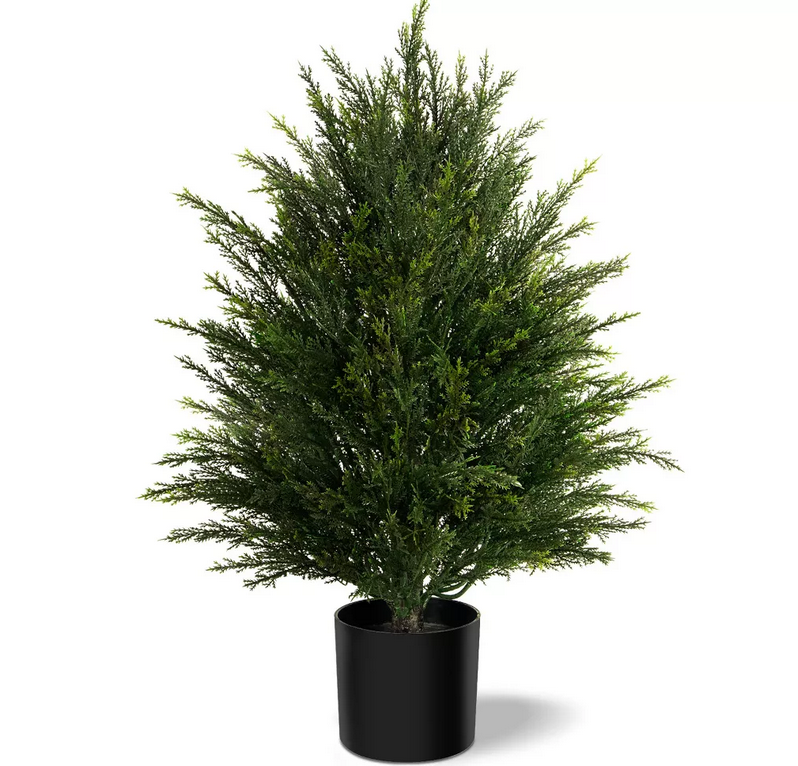
1/2 Packs 2ft Artificial Cypress Potted Plants Realistic Faux Greenery, Indoor/Outdoor Decor UV Resistant No Maintenance
- Highlights
- Instant Greenery & Effortless Style with 1-Pack 2ft Artificial Cypress Plants: This set brings you two beautifully designed, 2ft Artificial Cypress Plants, offering an instant and stylish way to add a touch of nature to any space. Enjoy the vibrant green hues and realistic texture without the need for any upkeep.
- Perfect for Any Space: Indoor & Outdoor Versatility: Enhance your indoor or outdoor decor with these versatile faux cypress trees. Whether you’re decorating your living room, patio, office, or balcony, these plants add a refreshing and elegant touch to any setting.
- UV-Resistant & Long-Lasting Beauty: Crafted with UV-resistant materials,these artificial plants maintain their vibrant green color and lifelike appearance, even when exposed to sunlight. Enjoy their beauty for years to come, both indoors and outdoors.
- No Maintenance, Just Pure Aesthetic Appeal: Say goodbye to watering, pruning, and fertilizing. These no maintenance potted plants offer the perfect solution for busy individuals who want to enjoy the beauty of greenery without the hassle. Simply place them on your tabletop or floor and enjoy their everlasting charm.
$35.99
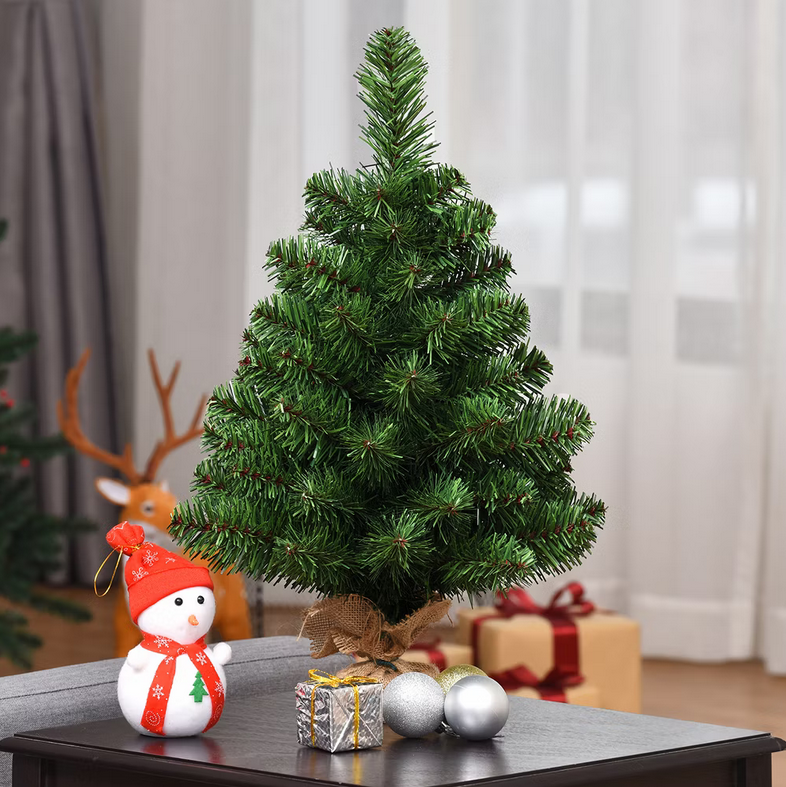
Tangkula 2’PVC Artificial Small Christmas Tree Holiday Season Decoration
- Highlights
- 【Quick to Assemble & Easy to Fluff】: Designed with a complete spruce tree shape, this small artificial Christmas tree saves a lot of time and energy for your assembly and fluffing. After receiving the package, you only need to unfold the branches to get a beautiful Christmas tree.
- 【Environmental-friendly PVC Material】: Choose 100% new long-lasting PVC material instead of ordinary recyclable plastic, the needles of our Christmas tree have stronger resistance to corrosion and deformation. Moreover, odorless PVC has become the first choice for family-friendly decoration materials.
- 【User-friendly Burlap Base】: In order to further improve your comfort, the base of the Christmas tree is tightly surrounded by rough burlap, which greatly enhances stability and balances while helping the trunk stand more straight. In addition, the bottom fabric can effectively prevent scratches on the floor and tabletop.
- 【Vivid & Lifelike Look】: Different from other ordinary Christmas trees, our Christmas trees with a realistic treetop and lifelike needles fully demonstrate the vigorous growth trend and unlimited natural charm. This exquisite artificial Christmas tree will be the most attractive decoration for your Christmas.
- 【Classic Christmas Symbol】: Natural appearance combined with realistic needles, this classic Christmas tree can not only increase the joy of the holiday, but also perfectly convey the spirit of the festival. Besides, the simple design allows you to decorate your favorite gifts on the Christmas tree freely.
$22.99
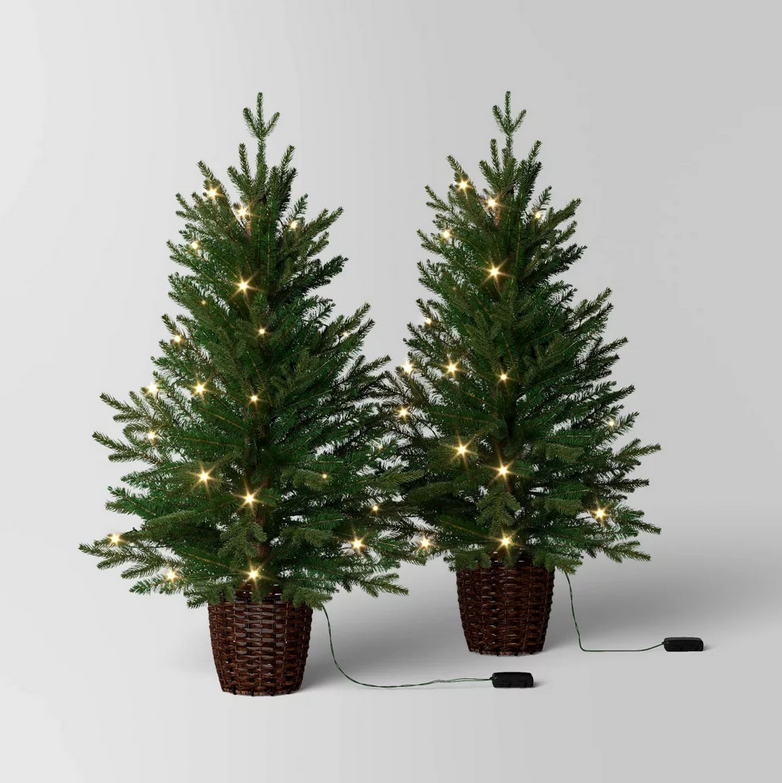
2pc 3′ Pre-Lit Potted Balsam Fir Artificial Christmas Trees Warm LED White Lights – Wondershop™
- Highlights
- 2pc Christmas pre-lit potted balsam fir tree
- Polyethylene material
- Woven vinyl container
- 100 warm white LED bulbs
- Flame-retardant and flame-resistant
- Push button control
- Indoor/ sheltered outdoor use
- 6 AA battery required, not included
$81.00
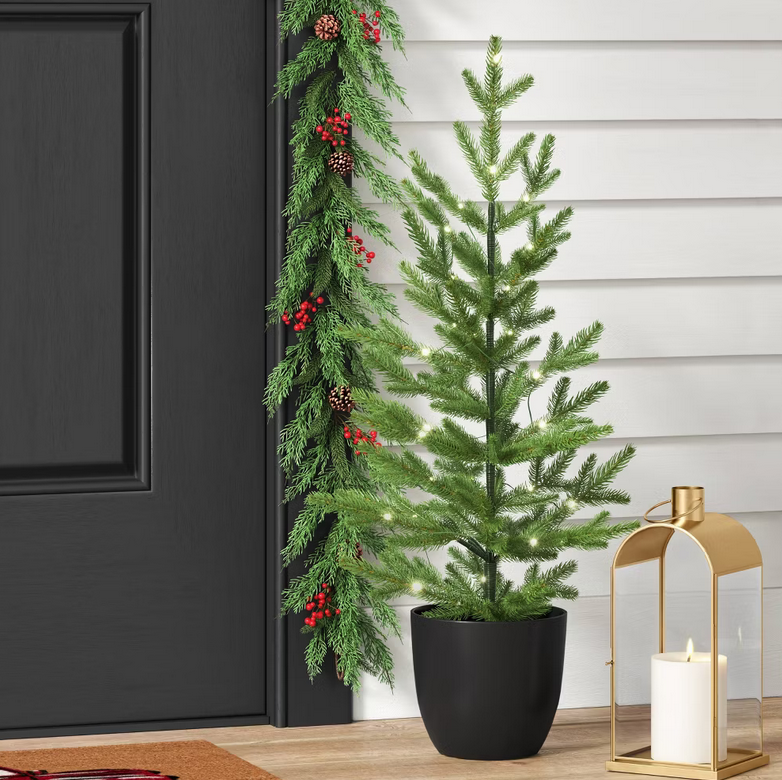
3′ Pre-lit Indexed Balsam Fir Mini Artificial Christmas Tree in Black Pot Warm White Lights – Wondershop™: LED, Battery-Operated
- Highlights
- Christmas pre-lit potted balsam fir tree with warm white LED lights
- Green faux tree in black pot
- Plastic construction
- Indoor/sheltered outdoor use
- 2 AA batteries required, not included
$27.00
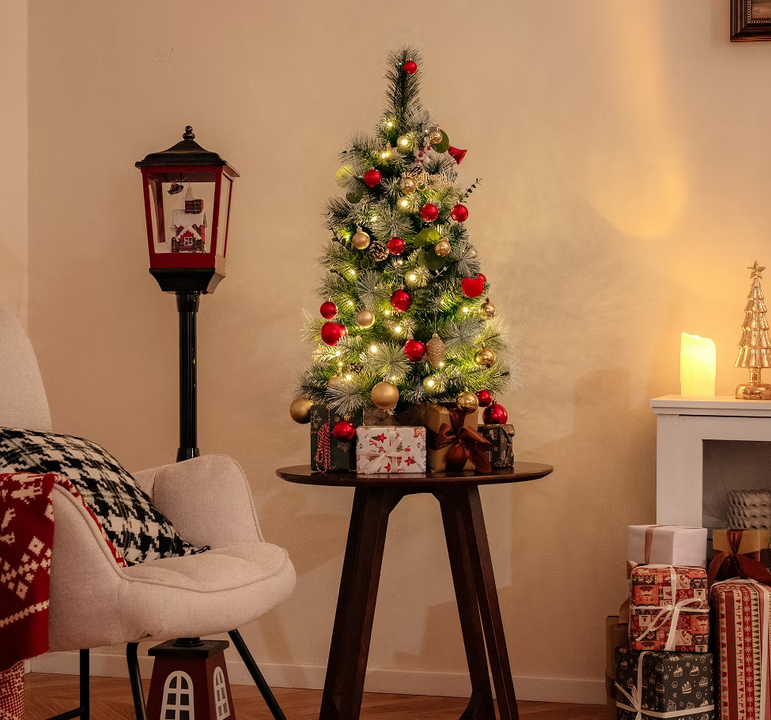
Tangkula 3 FT Artificial Entrance Christmas Tree Potted Seasonal Decoration Tree w/ 98 Snowy PVC Leaves & Snow-flocked Needles 1pc/2pcs
- Highlights
- Exquisite & Unique Appearance: Unlike traditional potted Xmas tree, ours features 5 clusters of white berries, frosted artificial leaves, and 5 natural flocked pine cones. The pre-decorated design creates a vivid and eye-catching appearance without any additional ornaments.
- Battery-powered Lights with Timer: With 30 warm white LED lights that come pre-installed on the artificial Christmas tree, you can effortlessly brighten up your celebrations. These lights are controlled by a convenient battery box, which offers an energy-saving 6-hour on and 18-hour off timing function.
- Lifelike Winter Wonder: The entrance Christmas tree boasts 98 branch tips, showcasing a blend of snowy PVC leaves and snow-flocked pine needles. This unique combination enhances the lifelike appearance of the tree, infusing your space with a touch of winter romance and charm.
- PVC Material & Burlap Base: Crafted from premium PVC material, the lighted entrance Xmas tree is flame-retardant and smell-free for worry-free decorating experience. Additionally, the cement base is wrapped by linen fabric to ensure stability and add visual delight.
- Versatile for Any Setting: The 3ft artificial Xmas tree is a classic festival symbol to spread the holiday cheer wherever it is placed, including apartments, offices or homes. Thanks to its compact size, the pre-lit Xmas tree is an ideal addition to tabletops, doorways and windowsills.
$37.99
From Shopping Smart to Styling Perfectly—Your Complete Resource for Choosing, Decorating, and Loving Your Tabletop Tree
I’ll never forget the year I discovered tabletop Christmas trees. I was living in a tiny studio apartment where a full-sized tree would have taken up half my living space, and I was genuinely heartbroken at the thought of spending the holidays without any festive greenery. That’s when I stumbled upon these charming miniature versions at a local craft store, and honestly, it changed everything about how I approach holiday decorating.
Now, several years and countless tabletop trees later, I’ve become something of an enthusiast—okay, maybe even a bit obsessed. I’ve collected them, gifted them, experimented with different styles, and learned more than I ever thought possible about these compact holiday companions. Today, I want to share everything I’ve discovered with you, because whether you’re dealing with limited space, want to add festive touches to multiple rooms, or simply adore the charm of miniature decorations, tabletop Christmas trees might just become your new holiday obsession too.
What Exactly is a Tabletop Christmas Tree?
Let me start with the basics. A tabletop Christmas tree is exactly what it sounds like—a smaller version of a traditional Christmas tree designed to sit on a table, desk, countertop, or any flat surface rather than standing on the floor. These aren’t just shrunken versions of regular trees, though. They’re specifically designed with proportions, decorations, and features that make them perfect for elevated display.
What I love most about these trees is their versatility. Unlike their full-sized cousins that command an entire corner of your living room, tabletop Christmas trees can go virtually anywhere. I’ve placed them on my dining table as a stunning centerpiece, on my desk to bring holiday cheer to my workspace, on bedside tables in guest rooms, and even on the kitchen counter where I can admire them while making my morning coffee. They’re like little doses of Christmas magic that you can sprinkle throughout your entire home.
The construction varies widely, and that’s part of what makes shopping for them so exciting. Some are artificial and pre-shaped, arriving ready to fluff and display. Others are live mini trees that bring that authentic pine scent into your space. I’ve seen versions made from everything from traditional PVC and PE materials to more creative options like felt, wood, metal, and even recycled paper. Each material brings its own aesthetic and charm to your holiday decor.
Understanding the Size: How Tall Are We Talking?
When I first started shopping for tabletop Christmas trees, I was surprised by the range of sizes available. The typical height ranges anywhere from twelve inches to four feet, though most fall comfortably in the two to three-foot range. This sweet spot is tall enough to make a real visual impact but compact enough to fit on standard furniture without overwhelming the space.
My personal collection includes a petite eighteen-inch tree that lives on my nightstand during December, a robust three-footer that serves as my dining table centerpiece, and several two-foot versions scattered throughout my home. The beauty of these varying heights is that you can create visual interest by clustering different sizes together, or you can select the perfect size for each specific location in your home.
I’ve learned that when choosing the height, you need to consider not just the surface where it will sit, but also the space above it. A three-foot tree on a thirty-inch-high table means you’re looking at a total height of five and a half feet—something that could interfere with lighting fixtures, shelves, or ceiling fans. Trust me, I learned this the hard way when I had to relocate a tree because it kept getting tangled in my overhead pendant light every time someone walked past the table.
The width matters too, though this gets less attention. Most tabletop Christmas trees have a diameter between one and two feet at their widest point. I always measure both the height and width of the space I’m working with before shopping, saving myself from awkward returns or cramped-looking displays.
Where to Find Your Perfect Tabletop Tree
The shopping landscape for tabletop Christmas trees has exploded in recent years, which is fantastic news for us consumers but can feel overwhelming when you’re trying to figure out where to start looking. Let me walk you through the options I’ve explored over the years.
Big-box retailers like Target, Walmart, and Home Depot are my go-to spots for affordable, straightforward options. These stores typically stock their tabletop trees starting in late October, and I’ve found some absolute gems there. The selection tends toward classic styles—traditional green trees with various lighting options—but the prices are hard to beat, usually ranging from twenty to sixty dollars for most models.
Specialty Christmas stores, both physical locations and online shops, offer more unique and high-quality options. I’ve discovered stunning tabletop Christmas trees with incredible attention to detail, realistic needle work, and innovative designs at places like Balsam Hill, Bronner’s Christmas Wonderland, and The Christmas Palace. Yes, you’ll pay more—sometimes significantly more—but the quality and uniqueness often justify the investment, especially if you’re looking for something truly special.
Craft stores like Michaels, Hobby Lobby, and Joann Fabrics have become unexpected favorites of mine for tabletop trees. They carry not only pre-made trees but also DIY kits and supplies if you want to create your own. Plus, these stores run incredible sales throughout the holiday season, and I’ve snagged beautiful trees for fifty percent off or more by timing my purchases right.
Online marketplaces have opened up a world of possibilities. Amazon offers an overwhelming selection with the convenience of home delivery and customer reviews to guide your choices. Etsy has become my secret weapon for finding unique, handcrafted, and vintage-style tabletop Christmas trees that you simply won’t find anywhere else. I bought the most charming bottle brush tree collection from an Etsy seller last year, and they’ve become treasured pieces of my holiday decor.
For live trees, local nurseries, garden centers, and some grocery stores carry miniature varieties during the holiday season. I’ve also had success with Christmas tree farms that sell tabletop-sized versions of whatever species they’re growing. The selection for live trees is more limited and seasonal, so I’ve learned to shop early if I want the best choices.
The Magic of Pre-Lit Options
Let me tell you about the revelation that was discovering pre-lit tabletop Christmas trees. After years of wrestling with tangled light strands and spending what felt like hours trying to achieve even coverage on my trees, finding pre-lit options felt like discovering fire or the wheel—a complete game-changer.
Pre-lit tabletop Christmas trees come with lights already integrated into the branches, professionally placed to ensure even distribution and optimal glow. The lights are typically strung through the interior of the tree and emerge at strategic points throughout the branches, creating a beautifully balanced illumination that’s incredibly difficult to achieve when adding lights yourself.
The variety in lighting options is astounding. You can find warm white LEDs that create a classic, cozy glow—my personal favorite for traditional-looking trees. Cool white LEDs offer a more modern, crisp appearance that pairs beautifully with contemporary decor. Multicolored lights bring that nostalgic, playful vibe that reminds me of childhood Christmases. Some trees even feature color-changing LEDs with remote controls, allowing you to adjust the ambiance to match your mood or your holiday party theme.
I particularly appreciate the energy efficiency of LED pre-lit trees. My collection of pre-lit tabletop Christmas trees can run for the entire holiday season without making a noticeable dent in my electric bill. LEDs also run cooler than traditional incandescent bulbs, which is a genuine safety advantage when dealing with trees that might be placed near curtains, papers, or other flammable materials on tables and desks.
The quality of pre-lit trees varies significantly, and I’ve learned to check reviews carefully. Some budget options have lights that burn out quickly or unevenly, while higher-quality trees often feature bulbs that stay lit even when individual LEDs fail. Look for trees with “stay-lit” technology if you want to avoid the frustration of entire sections going dark.
One consideration I didn’t anticipate when I first bought pre-lit trees: they’re harder to store compactly. The integrated lights add bulk and make the branches less flexible, so they require more storage space than their unlit counterparts. I’ve made peace with this trade-off because the convenience during setup is absolutely worth it.
Decorating Your Tabletop Tree: The Art of Small-Scale Styling
Decorating a tabletop Christmas tree is where the real fun begins, and I’ve discovered it requires a slightly different approach than decorating full-sized trees. The scale demands more intentionality—every ornament is more visible, every element more prominent, so each choice matters more.
My first rule for decorating tabletop trees is to consider proportion carefully. Standard-sized ornaments often overwhelm smaller trees, throwing off the visual balance entirely. I learned this the hard way when I tried hanging my favorite full-sized glass balls on my first tabletop tree—it looked absurd, like a tiny tree struggling under the weight of oversized decorations. Now I specifically seek out miniature ornaments designed for tabletop Christmas trees, which are typically one to two inches in diameter.
I start with a theme or color scheme for each tree. Because I have multiple tabletop Christmas trees throughout my home, I can experiment with different aesthetics in each room. My dining room tree follows an elegant gold-and-white scheme that complements my formal dinnerware. The tree in my home office rocks a more playful red-and-green traditional look with miniature office-themed ornaments—tiny typewriters, pencils, and books that make me smile during work hours. My bedroom tree embraces a soft, romantic style with blush pink and silver tones.
Garland and ribbon need to be scaled down too. I use thin ribbon, typically one-half to one inch wide, which looks proportional on smaller branches. Bead garland works beautifully on tabletop trees, adding sparkle without overwhelming the limited branch space. I’ve also fallen in love with miniature light-up garland specifically made for smaller trees—it adds an extra layer of glow without requiring additional outlets.
The topper deserves special attention. This is your tree’s crown, the element that draws the eye upward and completes the design. I’ve collected quite a few toppers over the years—stars, angels, bows, and more whimsical options like miniature top hats and crowns. The key is ensuring the topper is secure and proportional. A topper that’s too large or heavy can make the entire tree look unbalanced or even topple it over.
Don’t forget the base. While full-sized trees often hide their stands with tree skirts, the bases of tabletop Christmas trees are more visible and deserve consideration. I use small tree collars, decorative boxes, basket weaves, or festive fabric to disguise plain plastic stands. This finishing touch really elevates the overall presentation.
Choosing the Best Ornaments for Maximum Impact
Finding the best ornaments for tabletop Christmas trees has become something of a treasure hunt for me, and I’ve developed a keen eye for what works and what doesn’t at this smaller scale. The market for miniature ornaments has grown tremendously, giving us so many delightful options.
Miniature ball ornaments in various finishes—matte, glossy, glittered, or mercury glass—form the foundation of most of my trees. I typically use ornaments ranging from three-quarters of an inch to one and a half inches in diameter, depending on the tree’s size. These provide the bulk of the color and visual impact without overwhelming the branches.
Themed miniature ornaments add personality and tell a story. I’ve collected tiny versions of everything imaginable: miniature books for my library-themed tree, small kitchen utensils for the tree in my dining area, little musical instruments for a music-room tree. Hobby stores, specialty Christmas shops, and online marketplaces are treasure troves for these specific items. Each year, I add a few new themed pieces to my collection, building depth and interest over time.
Natural elements work wonderfully on tabletop trees and bring organic texture to the display. Small pinecones, tiny dried orange slices, cinnamon sticks, and sprigs of dried flowers create a rustic, nature-inspired aesthetic. I’ve even used small feathers, dried berries, and bits of eucalyptus. These natural ornaments are inexpensive—often free if you gather them yourself—and bring authentic holiday scent and character to your tree.
Handmade ornaments hold special significance on tabletop Christmas trees. Because these trees display fewer ornaments total, each one is more visible and meaningful. I treasure the tiny felt stockings my mother made, the miniature photo frames holding precious memories, and the small ceramic pieces I’ve picked up during travels. These personal touches transform a tree from merely decorative to genuinely meaningful.
I’ve learned to embrace negative space on tabletop trees. Unlike full-sized trees where more seems to equal merrier, smaller trees look better with thoughtful, well-spaced decoration. I aim for a balanced look where you can still see the tree’s shape and structure beneath the ornaments, rather than creating a cluttered mass of decorations.
Creating a Stunning Centerpiece
Using a tabletop Christmas tree as a centerpiece was one of my most successful decorating discoveries, and it’s become my signature holiday look for dinner parties and gatherings. There’s something magical about dining beside a beautifully decorated tree, especially when it’s lit and glowing as evening falls.
The key to successful centerpiece trees is ensuring they don’t obstruct conversation or movement. I learned early on that even a lovely tree becomes a nuisance if dinner guests can’t see each other across the table or if it’s constantly in the way of serving dishes. For my standard six-foot dining table, I find that a tree between twenty-four and thirty inches tall works perfectly—tall enough to make an impact but not so tall that it becomes a barrier between people seated across from each other.
I coordinate my tabletop Christmas tree centerpiece with my table setting for a cohesive look. If I’m using gold chargers and white china, my tree features gold and white ornaments. When I set a more rustic table with wooden elements and natural linens, the tree incorporates pinecones, burlap, and natural wood ornaments. This coordination creates a polished, intentional appearance that elevates the entire tablescape.
The base treatment matters tremendously for centerpiece trees. I often place my tree on a decorative platter, wooden charger, or mirror to create a distinct “moment” on the table and protect the table surface from any moisture or needles. Sometimes I surround the base with additional elements—pillar candles in coordinating colors, scattered ornaments, small wrapped gift boxes, or fresh greenery to extend the festive feeling beyond just the tree itself.
For dinner parties, I consider the practical aspects. I make sure any lights are on timers or easily accessible so I can turn them on without disturbing the table setting. I avoid fragile ornaments that might break if accidentally bumped by a serving platter. If I’m serving family-style with dishes being passed, I choose a slightly smaller tree or position it toward one end of the table rather than dead center.
The scent is another consideration I’ve learned to manage. While I love the fresh pine smell of live trees, it can compete with or overpower the aromas of a carefully prepared meal. For dinner party centerpieces, I often opt for artificial trees, saving my live tabletop Christmas trees for other locations in the home.
The Appeal of Real, Live Tabletop Trees
There’s something undeniably special about real tabletop Christmas trees. The authentic scent, the genuine needles, the knowledge that you’re bringing actual nature into your home—it creates a connection to the holiday tradition that artificial trees, no matter how realistic, can’t quite replicate.
Live tabletop Christmas trees come in several species, each with distinct characteristics. I’ve experimented with quite a few over the years. Norfolk Island Pine is popular because it adapts well to indoor conditions and has a perfectly symmetrical, tiered growth pattern that looks almost artificially perfect. However, it’s technically not a true pine, and it’s more of a long-term houseplant than a traditional Christmas tree.
Dwarf Alberta Spruce is a true evergreen that maintains its compact size naturally. It has a beautiful, dense growth pattern and that authentic Christmas tree appearance. I’ve successfully kept these alive after the holidays by transplanting them outdoors in spring, though they do require proper care and appropriate climate conditions.
True miniature versions of traditional Christmas tree species—like small Fraser Firs, Noble Firs, or Scots Pines—are sometimes available from tree farms or nurseries. These have that authentic Christmas tree look and smell that’s so nostalgic, but they’re temporary decorations rather than long-term plants.
Rosemary trees shaped and trained to look like Christmas trees have become increasingly popular. They’re wonderfully fragrant, can be used for cooking after the holidays, and make living plants that continue to grow. I have one that’s been going strong for three years now, living outdoors most of the year and coming inside for December.
The biggest challenge with real tabletop Christmas trees is finding them. Not all areas have nurseries or farms that stock them, and the selection tends to be limited compared to artificial options. I’ve had the best luck by calling ahead to nurseries in late October or early November to ask what they’ll be carrying and sometimes even pre-ordering specific varieties.
Caring for Your Live Tree
Once you bring home a live tabletop Christmas tree, proper care becomes essential. Unlike cut trees that are essentially dying from the moment they’re harvested, live trees are actual plants that you’re keeping alive indoors during their dormant season—a challenging proposition that requires attention and commitment.
Watering is the most critical aspect of care. I check the soil daily, ensuring it stays consistently moist but never waterlogged. Live trees in pots dry out more quickly than you might expect, especially indoors with heating systems running. I’ve learned to push my finger about an inch into the soil—if it feels dry, the tree needs water. Depending on the tree’s size and the pot it’s in, this might mean watering every day or every few days.
Light requirements vary by species. Most live tabletop Christmas trees prefer bright, indirect light. I position mine near windows but not in direct, hot sun that can stress the plant. If you’re keeping your tree in a darker location for aesthetic reasons, consider moving it to a brighter spot for several hours each day, then returning it to your display location. It’s extra effort, but it keeps the tree healthier.
Temperature and humidity management make a significant difference. Most evergreens prefer cool conditions, ideally between 60-65°F, which is cooler than many of us keep our homes. I avoid placing live trees near heating vents, fireplaces, or other heat sources. I also mist the foliage every few days to increase humidity, which these trees appreciate since heated indoor air tends to be quite dry.
Feeding typically isn’t necessary during the few weeks the tree is indoors for Christmas, but if you plan to keep your tree alive long-term, you’ll need to fertilize according to the specific species’ requirements. I use a diluted liquid fertilizer designed for evergreens, following the package directions carefully to avoid overfeeding.
The transition period matters tremendously for tree health. I never bring a live tree directly from cold outdoor conditions into a warm house. Instead, I acclimate it gradually, leaving it in a garage or covered porch for a few days to adjust. The same process works in reverse when transitioning the tree back outside after the holidays.
Current Trends in Tabletop Trees
Staying current with top trends for tabletop Christmas trees has become a hobby of mine, and the evolution of styles and technologies over recent years has been fascinating to watch. Each season brings fresh interpretations and innovations that keep this category exciting and dynamic.
The natural, organic aesthetic has dominated recent years. Flocked trees that mimic snow-dusted evergreens continue to be enormously popular, but the trend has expanded to include trees with realistic-looking frosted tips, iced branches, and glittered needles that catch light beautifully. I’ve noticed the flocking has become more sophisticated too—less of that heavy, obviously fake white coating and more subtle, naturalistic frost effects that look genuinely snow-touched.
Minimalist and Scandinavian-inspired designs have gained serious traction. These tabletop Christmas trees feature sparse branching, often with a somewhat raw, natural appearance. They’re typically decorated simply with white lights and minimal ornaments, embracing the “less is more” philosophy. I have one in my bedroom that’s essentially just branches with warm white LED lights, and the simplicity is surprisingly powerful and peaceful.
Metallic trees have emerged as a bold trend. Gold, rose gold, silver, and even copper trees make striking statements. Some are fully metallic, while others feature metallic accents on green bases. I was skeptical at first, but after seeing a stunning rose gold tree at a friend’s house, I’m a convert—these work beautifully in modern, glamorous spaces.
Black trees—yes, black—have become a thing, particularly among design-forward decorators. These dramatic trees serve as stunning backdrops for bright ornaments and lights, creating high-contrast displays that photograph beautifully. They’re not for everyone, but for contemporary spaces, they’re genuinely striking.
The vintage bottle brush tree revival has been one of my favorite trends. These retro-style trees, originally popular in the 1950s and ’60s, have made a major comeback. You can find them in traditional green or in a rainbow of colors—pink, mint, red, even rainbow ombre versions. They pair perfectly with vintage-inspired ornaments and mid-century modern decor.
Smart technology integration is emerging in higher-end tabletop Christmas trees. I’ve seen trees with app-controlled LED lights that can be programmed for different colors, patterns, and timings. Some include built-in Bluetooth speakers for playing holiday music. While purists might scoff, these technological touches appeal to a growing segment of consumers who want their holiday decor to integrate with their smart home systems.
Understanding the Investment: Price Ranges
The question of how much a tabletop Christmas tree costs has a remarkably wide answer, ranging from under ten dollars to several hundred dollars or more. Understanding what influences pricing helps you make informed decisions about where to invest your money.
Budget-friendly options, typically priced between ten and thirty dollars, are readily available at mass retailers. These are usually basic artificial trees, often unlit, with simple branch construction. They’re perfect for temporary displays, kids’ rooms, or situations where you want multiple trees without significant investment. I’ve bought several in this range for my guest bedrooms and home office, and while they don’t have the realism or quality of more expensive trees, they serve their purpose admirably.
Mid-range tabletop Christmas trees, priced between thirty and eighty dollars, offer noticeable quality improvements. These typically feature better materials, more realistic needle work, fuller branch construction, and often come pre-lit with quality LED lights. I consider this the sweet spot for most shoppers—you get a tree that looks good and will last multiple seasons without breaking the bank.
Premium artificial trees, ranging from eighty to two hundred dollars, provide exceptional realism and quality. These feature materials like PE (polyethylene) needles molded from real tree branches, dense branch construction, quality lighting systems, and often come from specialty Christmas retailers or high-end brands. I invested in one of these for my main living space, and the difference in appearance and quality is undeniable—guests regularly ask if it’s real.
Ultra-premium and specialty trees can exceed two hundred dollars. These might include designer trees with unique shapes or materials, exceptionally realistic models from luxury brands, or artisan-made trees from independent creators. I’ve splurged on a couple of these from Etsy artists—handcrafted pieces that function as art as much as holiday decor.
Live tabletop Christmas trees have different pricing structures. Small potted evergreens typically cost twenty to sixty dollars, depending on the species, size, and source. Rosemary topiaries shaped into tree forms usually run fifteen to forty dollars. These represent different value propositions since you’re buying living plants that can potentially survive beyond the holiday season.
When evaluating cost, I consider the per-season expense. A twenty-dollar tree that lasts two seasons costs ten dollars per year, while a hundred-dollar tree that lasts ten seasons costs just ten dollars per year. Quality often proves more economical long-term, though it requires more upfront investment.
The Flocked Fantasy
Flocked tabletop Christmas trees hold a special place in my heart—and in my holiday decorating lineup. There’s something inherently magical about snow-dusted branches, even if that snow is artificial flocking applied to create the illusion of winter wonder.
Flocking quality varies dramatically across different trees and price points. Budget flocking can look chalky and obviously artificial, sometimes shedding white dust throughout your home—a nightmare for furniture and carpets. Higher-quality flocking has a more realistic texture and appearance, with better adhesion that minimizes shedding. I’ve learned to check reviews specifically mentioning flocking quality before purchasing.
The weight of flocking coverage is a matter of personal preference. Some flocked tabletop Christmas trees feature heavy, full coverage that makes the tree appear completely snow-laden. Others have lighter, more subtle flocking that allows the green of the tree to show through, creating a fresh-snowfall appearance. I actually own examples of both—the heavily flocked tree goes in my front entryway for dramatic impact, while the lightly flocked version sits in my living room for a softer effect.
Color variations in flocked trees have expanded beyond traditional white. I’ve seen trees with colored flocking in pink, blue, silver, and even multicolored ombre effects. These work beautifully for themed displays or non-traditional color schemes. My pink flocked tree in the guest bedroom creates the most enchanting, romantic atmosphere paired with rose gold ornaments and soft white lights.
Maintaining flocked trees requires some special consideration. I never store them in damp areas because moisture can damage the flocking. I use tree storage bags specifically designed to protect flocked trees from compression and damage. When setting up and breaking down flocked trees, I work carefully to minimize branch handling that might disturb the flocking.
One consideration I didn’t initially appreciate: flocked trees show dust more readily than regular green trees. I lightly dust mine mid-season with a soft brush attachment on my vacuum, being gentle to avoid disturbing the flocking. This keeps them looking fresh throughout the holiday period.
Crafting Your Own: DIY Possibilities
Creating a DIY tabletop Christmas tree has become one of my favorite holiday activities. There’s something deeply satisfying about crafting your own tree, and the creative possibilities are genuinely limitless. Plus, DIY trees offer unique aesthetic options you simply can’t buy ready-made.
Cone-shaped foam forms provide the easiest foundation for DIY trees. I’ve covered these with everything imaginable: wrapped them in yarn or ribbon in spiral patterns, glued on buttons in gradient colors, attached fabric rosettes in overlapping rows, and even created a tree entirely from layered paper doilies. The cone provides structure while you bring creativity and personality.
Branch-based DIY trees offer a more organic approach. I’ve made trees by securing collected twigs and branches into a cone shape using floral wire and a foam base. These rustic creations work beautifully when left natural or can be painted, flocked with craft snow, or decorated with small pinecones and berries. Each tree is truly one-of-a-kind because natural branches are never identical.
Book page trees have become incredibly popular, and I understand why—they’re stunning and surprisingly simple to create. You fold pages from an old book into triangular shapes and glue them to a cone form, creating a sculptural tree perfect for libraries or reading nooks. I made one using pages from a vintage Christmas carol book, and the text visible on the folded pages adds an extra layer of meaning.
Fabric and felt trees open up wonderful possibilities. I’ve created trees by cutting graduated circles of felt, stacking them on a dowel, and securing with a button or star on top. Fabric trees can be sewn or glued, plain or patterned, embellished or simple. These work particularly well in children’s rooms because they’re soft, safe, and often washable.
Wire and bead trees combine engineering with artistry. Using a sturdy wire base, you twist and shape branches, then add beads, crystals, or other elements for “foliage.” The transparency of these trees makes them magical when backlit or placed in front of windows. I spent several winter evenings creating a copper wire tree adorned with vintage crystal beads, and it’s become one of my most treasured pieces.
The DIY tabletop Christmas tree approach allows you to create trees that exactly match your aesthetic, fit your space perfectly, and express your creativity. Plus, the crafting process itself has become a cherished holiday tradition for me, a meditative, creative practice that gets me into the holiday spirit more effectively than simply shopping for ready-made decorations.
Portable Power: Battery-Operated Options
Battery-operated tabletop Christmas trees have revolutionized where and how I can display trees throughout my home. Freedom from outlet dependency opens up so many possibilities that simply weren’t practical with plug-in trees.
The technology has improved dramatically in recent years. Early battery-operated trees had weak, dim lights that barely glowed and drained batteries alarmingly fast. Modern versions feature bright LED lights that provide genuine illumination while running for weeks on a single set of batteries. I have several that run on two or three AA batteries and stay lit for the entire holiday season with daily use of four to six hours.
Timer functions are game-changers on battery-operated trees. Many models include built-in timers that turn lights on for a set period—typically six or eight hours—then automatically shut off, conserving battery life. I set my bedroom tree to illuminate each evening when I’m winding down, then shut off after I’m asleep. It creates the perfect ambiance without wasting power or requiring me to remember to switch it off.
The placement flexibility of battery-operated tabletop Christmas trees can’t be overstated. I’ve put them on bookshelves far from outlets, on a console table in a hallway with no nearby plug, in a bathroom for holiday atmosphere during guest visits, and even on an outdoor covered porch where running electrical cords would have been impractical. Each placement would have been impossible or complicated with plug-in trees.
Quality in battery-operated trees varies significantly. I’ve learned to invest in models from reputable brands rather than bottom-tier options. Better-quality trees have secure battery compartments that don’t pop open accidentally, quality LED lights that provide even illumination, and efficient power management that maximizes battery life.
One consideration is ongoing cost. Depending on how many trees you have and how often you use them, battery replacement can add up. I’ve started using rechargeable batteries in my battery-operated trees, which has nearly eliminated this expense while being more environmentally responsible. The initial investment in rechargeable batteries and a charger pays for itself within a season or two.
Remote controls on some battery-operated trees add another layer of convenience. Being able to turn trees on or off, adjust brightness, or change lighting modes without physically accessing the battery compartment makes these trees even more practical, especially when they’re displayed in hard-to-reach locations.
Proper Storage Strategies
Learning the best way to store a tabletop Christmas tree has saved me considerable frustration, money, and space over the years. Proper storage protects your investment and ensures your tree looks fresh and new when you unpack it next season.
Original packaging offers the best protection if you still have it. Manufacturers design packaging specifically to protect trees during shipping, which means it’s also ideal for storage. I’ve kept boxes for my higher-quality trees specifically for this reason. However, original boxes can be bulky and awkward to store, especially if you have multiple trees.
Tree storage bags designed specifically for tabletop Christmas trees have become my preferred solution. These come in various sizes and typically feature durable materials, handles for easy carrying, and sometimes internal dividers or compartments for ornaments. I buy bags slightly larger than my trees to avoid cramping branches. Red or green storage bags make it easy to identify Christmas items in my storage area.
Climate-controlled storage is important, though not always practical. Extreme temperatures—both hot and cold—can damage certain materials over time. Humidity can promote mold or mildew on fabric components and may damage electrical elements in pre-lit trees. I store my trees in my house’s climate-controlled basement rather than in the attic or garage where temperatures fluctuate wildly.
Before storage, I clean my trees thoroughly. I use a vacuum with a soft brush attachment to remove dust and any debris that accumulated during the display season. For live trees I’m keeping, I transition them back outside gradually and provide appropriate care for their dormant period. This preparation ensures trees are ready to display next season without requiring extensive cleaning.
Disassembly technique matters for trees that separate into sections. I’ve learned to fold or compress branches carefully rather than forcing them, which can break internal wires in pre-lit trees or damage realistic needle work. For trees with removable decorations, I take extra time to remove ornaments and store them separately rather than leaving them on during storage, which can create pressure points that permanently bend branches.
Labeling storage containers has saved me enormous time. I label each box or bag with the tree’s description, size, and intended location: “Dining room tree – 3ft gold/white” or “Bedroom tree – 2ft pink flocked.” This simple step eliminates the need to open multiple containers when decorating next season, streamlining the entire setup process.
Documentation through photos helps too. I photograph each decorated tree before I dismantle it, creating a visual reference for next year. This makes redecorating faster and ensures I can recreate looks I loved or try something completely different if I’m ready for change.
Outdoor Display Considerations
The question of whether you can use a tabletop Christmas tree for outdoor decor comes up frequently, and my answer is always: it depends on the specific tree and your definition of “outdoor.”
Covered outdoor spaces—porches, patios, and balconies with overhead protection—work well for many tabletop Christmas trees, particularly artificial ones designed to withstand light exposure to elements. I’ve successfully displayed trees on my covered front porch for several seasons. The key is ensuring they’re protected from direct rain, snow, and extreme weather while still getting that outdoor festive exposure.
Artificial trees designed for outdoor use specifically mention this in their product descriptions. These trees feature materials and construction that handle moisture, temperature fluctuations, and UV exposure better than standard indoor trees. Outdoor-rated electrical components in pre-lit trees are essential if you’re using the lighting feature outside. I would never use an indoor electrical tree outdoors—the safety risk simply isn’t worth it.
Battery-operated tabletop Christmas trees offer safer options for outdoor display since they eliminate electrical safety concerns. The trees themselves still need weather protection, but you avoid the hazards associated with outdoor electrical connections. I use battery-operated trees on my porch specifically to sidestep the challenge of running outdoor-rated extension cords.
Weather considerations go beyond just rain and snow. Wind can topple tabletop trees easily since they’re lighter than full-sized trees and have less stable bases. I’ve learned to weight bases with rocks or secure trees to stable surfaces to prevent them from blowing over during windy conditions. Nothing puts a damper on holiday cheer quite like discovering your beautiful tree face-down on the porch after a storm.
Live trees handle outdoor display differently. Most potted evergreens are actually happier outdoors in winter than inside your heated home. I’ve decorated live tabletop Christmas trees and kept them on my covered porch, bringing them inside only for special occasions or gatherings. This approach keeps the trees healthier while still allowing them to contribute to outdoor holiday displays.
Temperature extremes can damage certain materials. Cheap plastic components may become brittle and crack in freezing temperatures. Flocking might absorb moisture and deteriorate. Fabric elements can fade from sun exposure or develop mildew in humid conditions. I check manufacturer guidance and err on the side of caution, typically reserving my nicest trees for indoor display and using more basic, resilient trees outdoors.
Understanding Materials and Construction
The materials tabletop Christmas trees are made from dramatically impact their appearance, feel, durability, and price point. Over years of collecting, I’ve developed strong preferences based on where I’m using each tree and what aesthetic I’m trying to achieve.
PVC (polyvinyl chloride) is the most common and economical material for artificial tree needles. These trees feature branch tips made from thin strips of green plastic film, cut and shaped to resemble needles. Budget-friendly PVC trees can look obviously artificial, but higher-quality PVC trees with varied needle lengths, multiple shades of green, and quality construction can be surprisingly realistic. Most of my basic trees that serve decorative roles in secondary spaces are PVC, and they perform their function perfectly.
PE (polyethylene) needles represent a significant quality upgrade. These needles are molded from real tree branches, creating incredibly realistic texture and appearance. PE trees feel authentic when you touch them and look convincing even under close examination. The difference between PVC and PE is immediately apparent, and while PE trees cost more, the elevated realism justifies the price for prominent display locations. My living room tabletop Christmas tree is PE, and guests consistently ask if it’s real.
Mixed-material trees combine PVC and PE, using PE for outer, visible branches where realism matters most and PVC for inner branches that are less visible. This approach balances realism with affordability, and I’ve found these hybrid trees offer excellent value. They look substantially more realistic than pure PVC trees while costing less than full PE construction.
Metal trees—constructed from wire, tin, or other metals—create entirely different aesthetics. Vintage-style metal trees evoke mid-century nostalgia. Contemporary metal trees in gold, silver, or copper finishes make bold, modern statements. I have a silver metal tree that’s essentially sculptural art, decorated minimally with clear glass ornaments that complement its industrial aesthetic.
Wood forms the foundation for some of my favorite unique trees. Wooden tabletop trees might be carved, assembled from branches, constructed from dowels, or created from wood slices stacked to form tree shapes. Each has distinct character and brings natural warmth to displays. I particularly love rustic wooden trees in farmhouse-style spaces where they complement other natural materials.
Fabric and felt trees offer soft, safe options perfect for children’s spaces or bedrooms. I appreciate that these can’t break or shatter, won’t scratch furniture, and often pack and store more easily than rigid trees. The aesthetic is decidedly different—more whimsical and craft-oriented than realistic—but that’s part of their charm.
Bottle brush trees, made from twisted wire wrapped with dyed sisal or similar materials, have that distinctive vintage texture that’s instantly recognizable. Available in countless colors and sizes, these trees work beautifully in retro-inspired displays or clustered together for visual impact. I have a whole collection of miniature bottle brush trees in pastel colors that create the most charming winter village scene on my mantel.
Keeping Things Stable and Safe
Learning how to secure a tabletop Christmas tree to prevent it from falling became urgent after an unfortunate incident involving my cat, a two-foot tree, and my dining table. Thankfully, nothing broke, but it taught me that stability isn’t just about aesthetics—it’s about safety and protection for both the tree and surrounding items.
The base is your first line of defense. Quality trees come with stable, weighted bases designed to support the tree’s height and width. Cheaper trees often have flimsy plastic bases that provide minimal stability. I’ve learned to check base quality before purchasing, and I’m willing to pay more for trees with sturdy bases. It’s a worthwhile investment that prevents problems.
Weighted base modifications can stabilize trees with inadequate built-in bases. I’ve placed trees on larger, heavier decorative platters or boards, securing the tree to this stable platform. For trees that seem particularly tipsy, I’ve added weight to the base area—rocks inside decorative containers work well, as do bags of sand or weighted fabric wrapped around the base and hidden under tree skirts or collars.
Museum putty or adhesive mounting putty provides temporary but effective stabilization. I place small amounts under the tree base, securing it to the table surface. This removable adhesive holds firmly enough to prevent tipping but releases cleanly without damaging furniture. It’s particularly useful for tabletop Christmas trees in high-traffic areas or homes with pets and children.
Fishing line offers an invisible securing method for trees in particularly precarious positions. I’ve run nearly invisible fishing line from upper branches to secure points behind the tree—picture hooks, existing wall fixtures, or even temporary command hooks. The line is practically invisible but provides substantial stability, especially against forward-tipping.
Location strategy prevents many stability issues. I avoid placing trees on narrow surfaces where they could easily tip off the edge. I position them away from table edges, ensuring there’s adequate surface area on all sides. I keep trees away from paths where they might be bumped, and I never place them where dangling electrical cords could be tripping hazards.
The Christmas tree collar or decorative container can actually improve stability. I sometimes nest the tree’s base inside a slightly larger decorative container, filling gaps with sand, small rocks, or crumpled paper. This creates a broader, more stable footprint while adding decorative appeal. Heavy ceramic or metal containers work particularly well for this purpose.
For homes with pets, additional precautions may be necessary. I’ve moved particularly attractive trees to rooms I can close off when not home, preventing unsupervised feline interaction. Bitter apple spray on lower branches deters some pets from approaching trees, though effectiveness varies. For genuinely persistent pets, I’ve sometimes opted for wall-mounted or hanging trees that eliminate floor or table stability concerns entirely.
Themed Trees for Every Celebration
While most tabletop Christmas trees focus on traditional Christmas themes, the concept has expanded to include themed tabletop Christmas trees for specific holidays and occasions beyond just December 25th. This versatility is part of what makes these trees so appealing to me.
Halloween-themed tabletop trees have become increasingly popular. These feature black, purple, or orange trees decorated with miniature skulls, bats, jack-o’-lanterns, and cobwebs. I bought my first Halloween tree on a whim three years ago, and it’s become a beloved October tradition. Guests always comment on it, and it provides a sophisticated alternative to some of the more kitschy Halloween decorations.
Thanksgiving trees celebrate harvest and gratitude themes. These typically use fall-colored ornaments, miniature pumpkins, leaves in autumn hues, and ornaments expressing thankfulness. I decorate a tabletop tree each November with orange, gold, and brown ornaments alongside small tags where family members write what they’re grateful for. It’s become a meaningful tradition that extends the tree concept beyond traditional Christmas.
Valentine’s Day trees decorated in pink, red, and white with heart-shaped ornaments and love-themed decorations create festive focal points for February. I’ve seen adorable versions in retail spaces and restaurants, though I haven’t personally adopted this tradition. It demonstrates how the tabletop Christmas tree concept translates to other holidays with appropriate decorating.
Easter trees—yes, they’re a thing—celebrate spring with pastel colors, egg ornaments, small bunnies, and spring flower decorations. This tradition actually has European roots, where decorated Easter trees have long been traditional. I tried it one year with a white tree decorated in soft pastels, and it brought surprising springtime cheer to my space.
Patriotic trees for Independence Day use red, white, and blue color schemes with stars, stripes, and Americana themes. While less common than Halloween or Thanksgiving trees, I’ve seen stunning examples that work beautifully for summer gatherings and celebrations.
Birthday trees have become popular for children’s parties or milestone birthday celebrations. These can be decorated in party colors with small wrapped presents, balloons, and birthday-themed ornaments. A friend decorated one for her daughter’s birthday party, and it served as both decoration and photo backdrop—a creative, memorable approach.
The versatility of tabletop Christmas trees for these various celebrations demonstrates their fundamental appeal: they’re compact, manageable, easy to theme and redecorate, and they bring festive energy to any occasion. The tree structure provides instant recognizability and impact while the small scale keeps the concept approachable and fun rather than overwhelming.
Creative Display Ideas That Inspire
Exploring creative ways to display a tabletop Christmas tree has become an ongoing project for me. Beyond simply placing trees on tables, I’ve discovered countless inventive approaches that elevate their visual impact and integrate them more thoughtfully into overall home design.
Grouped displays create substantial impact from multiple smaller trees. I cluster three to five tabletop trees of varying heights together, creating a “forest” effect that’s more dramatic than any single tree could achieve. This works beautifully on mantels, sideboards, or large tables. I vary the decorating styles slightly between trees for visual interest while maintaining a cohesive color palette.
Elevated displays using pedestals, plant stands, or decorative columns add drama and visibility to tabletop Christmas trees. I’ve placed smaller trees on vintage wooden pedestals, giving them prominence and importance despite their modest size. This approach works especially well in entryways where the elevated tree greets visitors with immediate festive impact.
Unexpected locations surprise and delight. I’ve displayed tabletop trees in bathrooms (on the back of the toilet or on bathroom counters), in home offices (on filing cabinets or corner shelves), in laundry rooms (because why not?), and even in closets with doors left open to reveal the festive surprise. These unexpected placements spread holiday cheer throughout the entire home rather than concentrating it in main living areas.
Tiered or stepped displays create visual flow using multiple trees at different levels. I’ve arranged trees on a staircase, placing progressively smaller trees on ascending steps. I’ve also used risers, boxes, or books to create varied heights on flat surfaces, allowing multiple trees to each have visual prominence rather than hiding shorter trees behind taller ones.
Mirror backgrounds double visual impact. Placing a tabletop Christmas tree in front of a mirror creates the illusion of depth and doubles the lights’ glow. This works particularly well with pre-lit trees or trees with reflective ornaments. I have one positioned in front of my dining room mirror, and the reflection makes the space feel more expansive and doubly festive.
Seasonal transitions keep spaces fresh throughout extended holiday periods. I start December with traditionally decorated trees, transition to all-white or ice-blue themes after Christmas to extend winter decor through January, then switch to winter woodland themes with natural elements in February. The same trees serve multiple decorative purposes through simple redecorating.
Tray or cloche displays create curated vignettes around trees. I’ll place a tree on a decorative tray alongside complementary items—vintage ornaments, candlesticks, small wrapped packages, festive figurines. Alternatively, displaying a tree under a glass cloche creates a protected snow-globe effect that’s charming and dust-free.
Finding Your Perfect Tabletop Tree
After all these years of collecting, decorating, and experimenting with tabletop Christmas trees, I’ve learned that the perfect tree is deeply personal. What works beautifully in my home might not suit your space, your aesthetic, or your needs. But that’s actually what makes this category of holiday decor so wonderful—there’s genuinely something for everyone.
Start by considering your space. Measure not just the surface where you want to place a tree, but also the vertical space above it. Account for the topper’s height in your measurements. Consider the visual weight of the tree in relation to surrounding furniture and decor.
Define your aesthetic preferences honestly. Do you want realistic authenticity or charming whimsy? Traditional green or bold contemporary colors? Classic elegance or playful personality? There’s no wrong answer—only what resonates with you and complements your existing decor.
Evaluate your budget realistically, remembering that tabletop Christmas trees are investments that can serve you for many seasons. Sometimes spending more initially provides better value long-term than replacing cheaper trees every few years. However, budget trees definitely have their place, especially when you want multiple trees throughout your home.
Consider maintenance and storage capabilities. Pre-lit trees offer convenience but require more storage space. Live trees provide authenticity but demand ongoing care. Flocked trees create magical aesthetics but need gentle handling. Choose trees that align with the effort you’re willing and able to invest.
Think about versatility. If storage space is limited, can the tree be redecorated for multiple looks using different ornament sets? Can it transition from Christmas through winter into early spring with appropriate redecorating?
Most importantly, choose trees that bring you joy. I know this sounds simplistic, but our homes should reflect what makes us happy. If a pink flocked tree sparks joy every time you see it, that matters more than whether it follows current trends. If a simple green tree with warm white lights brings you peace, that’s the right choice regardless of what’s considered fashionable.
The world of tabletop Christmas trees offers endless possibilities—from traditional to whimsical, budget-friendly to luxury investment pieces, maintenance-free artificial to living plants that continue growing long after the holidays end. Whatever your space, style, and situation, there’s a perfect tabletop tree waiting to bring festive magic to your home. After years of collecting and decorating these charming miniature trees, I can confidently say they’ve enhanced my holiday experience in ways I never imagined when I bought that first little tree for my studio apartment all those years ago. Here’s to finding your perfect tree and creating your own traditions around these delightful, versatile decorations that truly bring Christmas cheer in the most manageable, beautiful way possible.